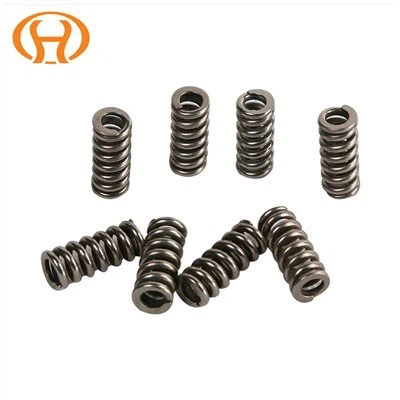
Επειδή το ελατήριο της βαλβίδας υπόκειται σε στρέψη όταν λειτουργεί, η κατανομή της τάσης στο κυκλικό τμήμα του είναι άνιση. Από την αρχή κοντά στο κέντρο σε κάθε σημείο της άκρης, η τάση αυξάνεται σταδιακά και η τάση στην επιφάνεια είναι μεγαλύτερη. Όσον αφορά τα επιφανειακά σημεία, η θετική εσωτερική επιφάνεια υπόκειται σε μεγαλύτερη τάση και υπόκειται σε επίπεδο τάση. Για το λόγο αυτό, όταν η επιφάνεια του ελατηρίου της βαλβίδας είναι ελαττωματική, είναι δυνατό να δημιουργηθεί μεγαλύτερη συγκέντρωση τάσης στο ελάττωμα, η οποία οδηγεί στο πρόωρο σπάσιμο του ελατηρίου.
Οι λόγοι για τους οποίους σπάνε τα ελατήρια της βαλβίδας, εκτός από τα κατασκευαστικά ελαττώματα, μπορεί επίσης να προκαλέσουν πρόωρη βλάβη λόγω ακατάλληλης χρήσης. Οι πιο συνηθισμένοι λόγοι είναι οι εξής:
①There are pits and corrosion pits on the surface of the spring. Due to improper storage, corrosion pits will be formed on the surface of the spring. When the spring is subjected to a large torsion force, it is easy to cause stress concentration at the corrosion pit, which will eventually lead to fatigue fracture of the spring.
Η μέθοδος ποιοτικού ελέγχου του νέου ελατηρίου βαλβίδας: συμπιέστε το ελατήριο σε μικρό μήκος σε μια μέγγενη πάγκου, ώστε να μην υπάρχει όσο το δυνατόν μεγαλύτερο διάκενο μεταξύ των δακτυλίων και διατηρήστε το για 48 ώρες. Εάν υπάρχουν ελαττώματα στην επιφάνεια του ελατηρίου, μετά από αυτή τη συμπίεση θα σπάσει μετά το χειρισμό. Αυτό οφείλεται στο ότι η εσωτερική τάση του ελατηρίου συγκεντρώνεται πολύ κοντά στο ελάττωμα, με αποτέλεσμα το ελατήριο να σπάσει.
Η αντοχή της ελαστικότητας του ελατηρίου της βαλβίδας μπορεί να προσδιοριστεί με τη μέθοδο σύγκρισης. Η συγκεκριμένη μέθοδος είναι: πρώτα, συνδέστε ένα παλιό ελατήριο βαλβίδας που θα ελεγχθεί με ένα νέο ελατήριο βαλβίδας σε σειρά και διαχωρίστε τα με μια χαλύβδινη ροδέλα. Στη συνέχεια, προσθέστε μια ορισμένη ποσότητα πίεσης σε ένα ελατήριο βαλβίδας και παρατηρήστε το βαθμό συμπίεσης του παλιού και του νέου ελατηρίου. Εάν η ελαστικότητα του παλιού ελατηρίου είναι ανεπαρκής, πρέπει πρώτα να πιεστεί προς τα κάτω.
②The center line of the spring is skewed. If the two end faces of the valve spring are not perpendicular to the center line of the spring, the spring will work at high speed for a long time, and the metal material will be easily broken due to fatigue. The inspection method for the verticality of the valve spring is: first place the spring vertically on the flat plate, use a square to lean on the bottom of the spring, and then rotate the spring for a circle, and measure the greater value of the distance between the upper circle of the spring and the square. . Usually, the inclined distance of the valve spring to the vertical line is 1.0-1.5mm. If it exceeds this value, it is better to replace it with a new one.
③The valve guide is moving or the camshaft bearing is loose. If the valve guide moves during use, it may cause the valve spring to break due to the bending stress when it is compressed. Loose camshaft bearings can cause valve springs to resonate and cause them to break.
④ Improper operation or installation. During the operation of the diesel engine, if the rotational speed frequently changes suddenly, the frequency of the valve spring being compressed and stretched will suddenly increase sharply, resulting in its fatigue fracture.
⑤ The valve spring is not assembled as required. When assembling valve springs, some models have special requirements. For example, the Isuzu 6BBl diesel engine requires that the blue-coated side of the spring face the upper plane of the cylinder head. Otherwise, the spring is easy to break.